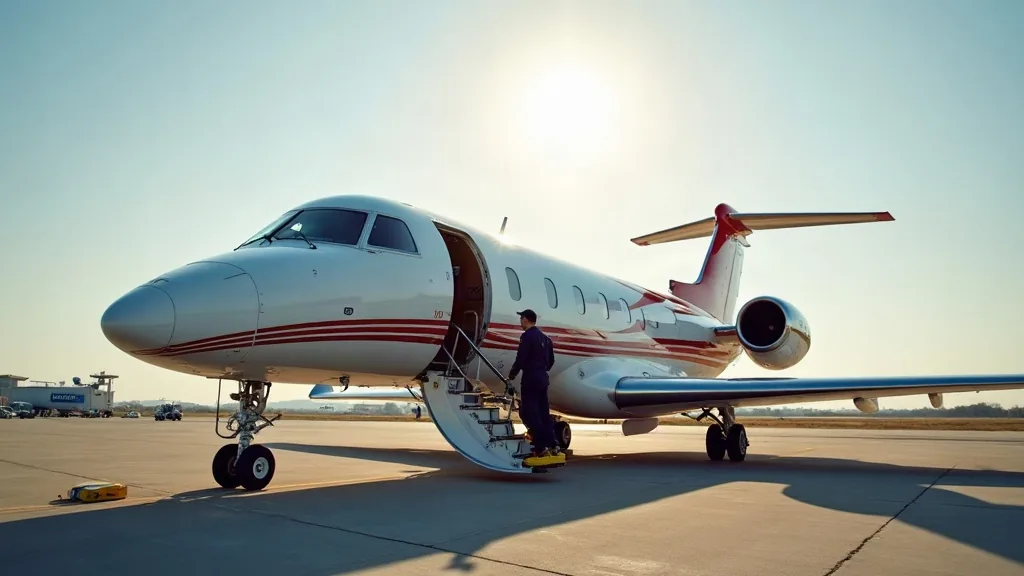
From Labuan Bajo, a helicopter usually handles the short ship-to-shore or dive-site leg, not the long haul to Bali. The practical mode for Komodo-to-Bali evacuation is fixed-wing air ambulance out of Komodo Airport (LBJ), after stabilisation at RS Siloam Labuan Bajo (+62 385 238 1911). A Komodo-region guide puts that fixed-wing leg at roughly USD 10,000-20,000 as of 2026.
Guests on liveaboards, dive boats and remote Flores itineraries ask for “helicopter medevac” because that is the word that matches an emergency. What actually moves a patient from a boat near Komodo National Park to a Bali hospital is usually a two-stage relay: a short rotor-wing or boat pickup to shore, then a fixed-wing flight from LBJ. This page lays out how that relay works, what each stage costs, and how the coordination desk gets it moving.
How Does a Labuan Bajo Helicopter Medevac Actually Work?
Helicopter use in this corridor is almost always the first leg, not the whole trip. A charter or liveaboard anchored off Rinca, Komodo, Padar or the smaller dive sites cannot always reach a jetty quickly, so a helicopter or a fast rescue boat closes that gap to the nearest stabilisation point, which for most Komodo-area cases is RS Siloam Labuan Bajo. From there, once the patient is stable enough to fly commercial-cabin altitude, a fixed-wing air ambulance departs LBJ for Bali. True helicopter-to-Bali direct flights exist but are the exception, reserved for cases where minutes matter more than cost.
For divers with decompression symptoms, the calculus changes again: a chamber case may route to a hyperbaric facility in Bali rather than a general ward, and Divers Alert Network’s 24-hour line (+1-919-684-9111) is the reference number vessels and dive operators keep on file worldwide.
What Does It Cost to Evacuate From Komodo to Bali?
Pricing in this corridor is bundled into three bands, and a piece that quotes only one number is oversimplifying. The table below reflects a Komodo-area cost guide referenced as of 2026; every figure is indicative and moves with aircraft availability, weather routing and patient condition.
| Stage | Mode | Indicative cost (2026) |
|---|---|---|
| Ship-to-shore or dive-site pickup | Helicopter or fast rescue boat | Charter-dependent; boat transfer is typically the lower-cost option when timing allows |
| Labuan Bajo to Bali | Fixed-wing air ambulance from LBJ | USD 10,000-20,000 |
| Bali onward to Singapore or Australia | International air ambulance | USD 50,000-100,000 (Komodo-guide range); wider Bali hospital sources cite USD 50,000-150,000 depending on destination and aircraft type |
A hyperbaric session in Bali runs roughly IDR 600,000-1,200,000 per session, and multi-day chamber treatment combined with ICU care can run USD 5,000-30,000 for divers who need extended decompression management. None of these figures are guaranteed quotes — they are the range a coordination desk works from when briefing a family or an insurer, and every quote should be re-verified against the operator’s current rate sheet before a family commits funds.
Where Are the Staging Points Between Flores and Bali?
Four locations do most of the work in an eastern Indonesia evacuation, and knowing which one applies changes the timeline a family should expect.
| Location | Role |
|---|---|
| RS Siloam Labuan Bajo | First stabilisation point for Komodo-area cases; phone +62 385 238 1911 |
| Komodo Airport (LBJ) | Fixed-wing departure point for the Labuan Bajo-to-Bali leg |
| Tambolaka Airport (Sumba) | Fixed-wing staging point for western Sumba cases |
| Waingapu Airport (Sumba) | Fixed-wing staging point for eastern Sumba cases |
Sumba functions as the second eastern staging cluster in this network — cases originating near Tambolaka or Waingapu route through the same Bali-hospital and insurer-liaison process, just from a different airstrip. A dedicated Sumba-corridor page in this network’s blog covers that routing in more detail; this page’s job is Labuan Bajo, Komodo and Flores.
Who Coordinates the Handover at RS Siloam Labuan Bajo?
This is where a broker desk earns its keep. Siloam stabilises; it does not arrange the onward flight, the Bali receiving hospital, or the insurer paperwork. A 2024 academic review of Indonesian air medical evacuation found that coordination normally has to bring together three separate parties — the airport health office (KKP), the destination hospital, and the insurer — and that existing rules define aircraft types without laying out an integrated evacuation procedure between them. That gap is exactly why a single coordination desk, working the phone lines to Siloam, the receiving Bali hospital and the insurer at the same time, shortens the process instead of leaving a family to make three separate calls from a hospital corridor.
What Rules Govern Air Ambulance Evacuation Here?
Indonesian air ambulance activity sits under Decree of the Minister of Health No. 882/Menkes/SK/X/2009 and Regulation of the Minister of Health No. 14/2021, both cited in the 2024 academic review referenced above. Neither BPJS nor most standard domestic travel policies fund evacuation once a patient needs to leave Indonesia, so international onward transfer from Bali is typically a separate insurance conversation, not an extension of local coverage. Some 2026 travel advisories report a requirement for minimum medical and repatriation insurance limits starting July 2026 — that is reported guidance, not confirmed law, and travelers should verify current requirements directly with Indonesian immigration before departure.
Why Does Timing Matter So Much in This Corridor?
Helicopter operations in Indonesia are required to end at sunset under current aviation rules, which means an incident on Komodo, Rinca or a remote dive site after dark defaults to boat transfer, ground ambulance once ashore, or overnight stabilisation at Siloam until first light. This is a planning fact, not a marketing point: a villa, resort or liveaboard operator building a standby plan around this corridor should assume night incidents move by water and road, not air, and should brief guests accordingly before a trip departs, not during one.
How Does Booking Work — From First Message to Wheels-Up?
- Message the desk on WhatsApp with vessel name (or hotel/dive site), GPS position or nearest landmark, and the patient’s condition in plain language.
- The desk contacts Siloam Labuan Bajo to confirm bed and stabilisation readiness and starts the pickup — helicopter, fast boat or ground ambulance depending on location and daylight.
- Fixed-wing booking runs in parallel out of LBJ once the patient is stable enough to fly, with the receiving Bali hospital and the insurer looped in at the same time rather than sequentially.
- Handover and paperwork close the loop: discharge summary from Siloam, admission at the Bali facility, and insurer documentation for reimbursement or guarantee of payment.
One Honest Call to Make
Bali Medevac is an independent coordination desk operated by Juara Holding Group (est. 2015) — it arranges Labuan Bajo, Komodo, Flores and Sumba evacuations with licensed medical and aviation partners; it is not a hospital, an airline, or an insurer, and it does not own aircraft. For a yacht or liveaboard building a standby plan before a season starts, or a family facing an active situation right now, message the desk directly: WhatsApp 6281139414563 or bd@juaraholding.com. State vessel name (or hotel), position, and condition — the desk takes it from there.
Frequently Asked Questions
Does a helicopter fly all the way from Komodo to a Bali hospital?
Rarely as a single direct leg. Most Komodo-area cases use a helicopter or fast boat only to reach RS Siloam Labuan Bajo, then a fixed-wing air ambulance from Komodo Airport (LBJ) completes the trip to Bali. Direct rotor-wing-to-Bali flights happen only when the case and range make it the faster option.
How much should a family budget for a Labuan Bajo to Bali evacuation?
A Komodo-region guide puts the fixed-wing leg from Labuan Bajo to Bali at roughly USD 10,000-20,000 as of 2026, on top of whatever the initial ship-to-shore or dive-site pickup costs. Figures move with aircraft availability and patient condition, so treat this as a planning range, not a fixed quote.
Can a rescue helicopter reach a liveaboard near Komodo at night?
No. Indonesian rules require helicopter operations to end at sunset, so an after-dark incident near Komodo, Rinca or a remote dive site typically moves by fast boat, then ground ambulance once ashore, with stabilisation at Siloam until a fixed-wing flight is possible at daylight.
What happens once a patient reaches RS Siloam Labuan Bajo?
Siloam stabilises the patient but does not itself arrange the onward flight, receiving hospital or insurer approval. A coordination desk works those three threads — airport health office formalities, the Bali hospital, and the insurer — in parallel so the family is not making separate calls from a hospital hallway.
Does travel insurance cover a Komodo or Labuan Bajo evacuation?
Domestic Indonesian coverage such as BPJS does not fund evacuation once a patient needs to leave the country, and many standard travel policies exclude international medevac entirely. Some 2026 advisories report new minimum insurance requirements from July 2026; verify current terms with your insurer and Indonesian immigration before relying on them.