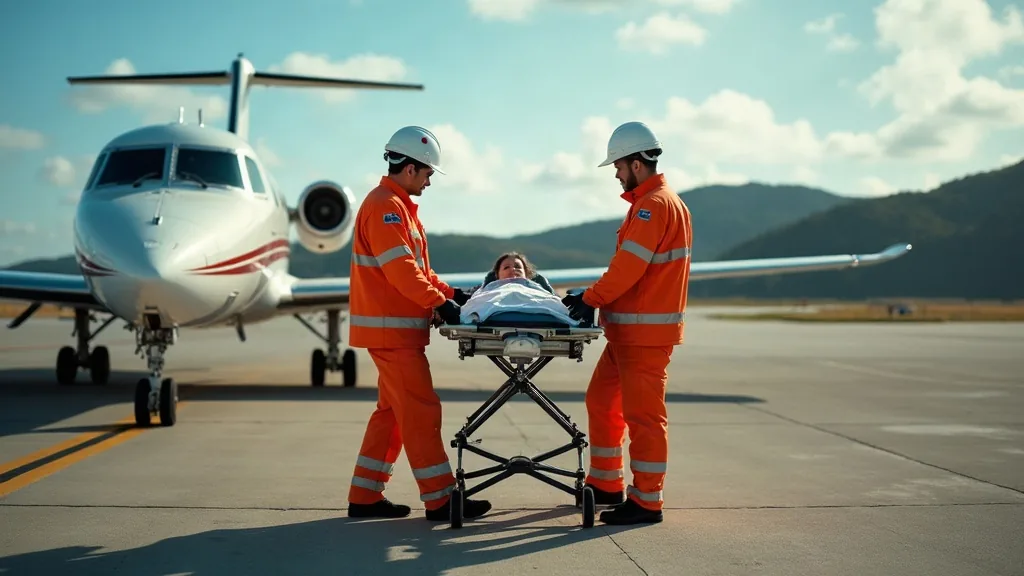
Private ground ambulance hire in Bali means booking a licensed ambulance provider through a coordination desk, not a hospital switchboard — for villa-to-hospital, harbour-to-hospital or hospital-to-airport legs. A Bali pre-hospital provider runs its sea-evacuation and ambulance dispatch operation from Jl. Uluwatu No. 69A, Kedonganan, and reported emergency response times in Bali’s major tourist zones sit around 12 minutes as of 2026. Bali Medevac’s desk takes your pickup point, time and condition on WhatsApp, then books the nearest licensed crew and alerts the receiving hospital’s ER.
Most requests fall into three patterns: a villa guest in Canggu, Seminyak, Ubud or Nusa Dua needing transport to BIMC, Siloam, Kasih Ibu or Sanglah; a traveller stepping off a fast boat at Sanur or Padang Bai harbour who needs onward transfer to hospital; or a discharged or arriving patient moving between Ngurah Rai airport and a hospital bed. Each pattern has a different vehicle, crew and time profile, which is why the desk asks for the condition before dispatching — a stable transfer and an unstable one are not the same booking.
What does private ambulance hire actually cover in Bali?
It covers the road and harbour leg only — not the flight. A ground ambulance moves a patient between a fixed point (villa, resort, dive shop, harbour pontoon, airport apron) and a hospital, or between two hospitals for a higher level of care. If the case needs a helicopter lift from Nusa Penida, Gili, Lombok or a fast-boat run from Labuan Bajo, or an international repatriation flight to Singapore, Australia or Jakarta, the desk escalates the same WhatsApp thread to the matching Bali Medevac page rather than starting a new conversation from zero.
How much does a ground ambulance cost on common Bali routes?
Pricing depends on distance, traffic at the time of day, and whether the crew carries basic first-aid kit or full ICU equipment. The figures below are indicative desk estimates for 2026 planning — the desk confirms an exact quote once it has the pickup point, destination and patient condition.
| Route | Indicative IDR band (2026) | Typical duration |
|---|---|---|
| Canggu / Seminyak villa → BIMC, Siloam or Kasih Ibu | 800,000–1,500,000 | 20–40 min |
| Ubud villa → nearest hospital (Sanglah or Kasih Ibu Denpasar) | 900,000–1,700,000 | 30–50 min |
| Nusa Dua / Jimbaran resort → BIMC Nusa Dua or Siloam | 700,000–1,300,000 | 15–35 min |
| Sanur harbour → hospital (after fast boat from Nusa Penida or Lembongan) | 500,000–1,000,000 | 15–30 min |
| Padang Bai harbour → Denpasar-area hospital | 1,000,000–1,800,000 | 45–75 min |
| Ngurah Rai airport → hospital (arrival or discharge transfer) | 600,000–1,200,000 | 15–30 min |
Traffic around Sunset Road, the Sanur bypass and the Padang Bai coast road at peak hours can push any of these bands toward the higher end, and a crew already on another call adds a wait window — the desk states both when it confirms dispatch.
What is the difference between a basic and an ICU ambulance?
A basic unit suits a stable patient who needs monitoring and a comfortable, safe ride — a sprained ankle from a scooter fall, mild dehydration, a controlled fracture. An ICU-equipped unit is for a patient whose condition could change in transit: post-surgical, cardiac, unstable vitals, or an inter-hospital transfer between Bali facilities.
| Feature | Basic ambulance | Advanced / ICU ambulance |
|---|---|---|
| Crew | Driver + EMT/first-responder | Driver + nurse or doctor + EMT |
| Oxygen | Portable cylinder | Fixed oxygen supply + backup |
| Monitoring | Pulse oximeter, manual BP | Cardiac monitor, continuous vitals |
| Equipment | Stretcher, first-aid kit, splints | Ventilator, defibrillator, IV infusion pumps |
| Typical use | Villa-to-clinic, minor injury, discharge ride | Inter-hospital transfer, pre-flight stabilisation, unstable patient |
| Indicative 2026 rate uplift | Baseline (see route table) | Roughly 1.8–3x the basic-unit fare on the same route |
The desk selects the crew type based on what you describe on WhatsApp, then confirms it against the receiving hospital’s ER before the vehicle leaves.
Does travel or boat insurance cover the ambulance ride?
Sometimes, and only partially. As a 2026 example, Jasindo’s Sanur Harbor partnership sells a 24-hour fast-boat passenger policy at a published rate that covers emergency medical risk on that specific crossing — useful context if your trip started with a Gili, Lombok or Nusa Penida fast boat, but it is a boat-leg policy, not a standing ambulance plan. BPJS does not fund evacuation abroad, and most travel policies bought outside Indonesia list ground ambulance as a reimbursable expense rather than a pre-paid service, meaning you typically pay the crew first and claim afterward. Bali Medevac does not sell insurance or process claims; the desk can point you to the receipt format your insurer will ask for, and confirm coverage questions belong with your policy provider, not with the ambulance crew.
How does booking work?
- Message the desk on WhatsApp with three things: pickup point, time needed, and the patient’s condition in plain language (conscious, breathing, injury type, any known conditions).
- The desk matches a licensed provider — basic or ICU crew — based on distance, current availability and what you described, and gives you a confirmed ETA.
- The receiving hospital’s ER is alerted before the vehicle arrives, so admission or a doctor consult is ready rather than starting cold at the door.
- The desk stays on the thread until handover; if the condition changes en route or turns out to need air evacuation or repatriation, the same conversation escalates to the relevant Bali Medevac coordination page instead of restarting.
Book a ground ambulance now
Bali Medevac is an independent coordination desk operated by Juara Holding Group (est. 2015) — a broker that arranges transport with licensed ambulance providers, not an ambulance operator, hospital or insurer. Message the desk with your pickup point, time and condition and it books the nearest licensed crew and alerts the hospital ER on your behalf.
WhatsApp: 6281139414563 — bd@juaraholding.com
Frequently Asked Questions
How fast can a private ambulance reach my villa in Bali?
Reported emergency response times in Bali’s major tourist zones (Canggu, Seminyak, Sanur, Nusa Dua) run around 12 minutes as of 2026, though traffic and crew availability at the moment of your call affect the real figure. The desk gives a confirmed ETA once it has your exact pickup point rather than quoting a fixed number upfront.
What’s the real difference between basic and ICU ambulance hire?
A basic unit carries a driver and EMT with oxygen, a stretcher and first-aid kit, suited to stable patients. An ICU unit adds a nurse or doctor, a cardiac monitor, ventilator and IV pumps for unstable or post-surgical patients and inter-hospital transfers, at roughly 1.8–3x the basic fare as of 2026.
Can I call an ambulance provider directly instead of going through the desk?
Yes, licensed providers can be reached directly, but the desk exists because it already knows which crews are near your location, which hospitals have beds and ER capacity right now, and can alert the ER before you arrive — useful when you are a visitor without local contacts or when the condition might need escalation to air evacuation.
Does the ambulance fare include hospital admission or treatment costs?
No. The ambulance fare covers transport only; hospital admission, ER consultation, treatment and any onward care are billed separately by the hospital. The desk can flag your insurer’s documentation needs but does not process hospital billing or insurance claims itself.
What happens if the patient needs a helicopter instead of a ground ambulance?
If the condition or location (an island, a remote dive site, after-dark timing when helicopter operations in Indonesia stop at sunset) rules out a road transfer, the desk escalates the same WhatsApp conversation to Bali Medevac’s helicopter or repatriation coordination, keeping the same pickup details rather than making you restart with a new provider.